
Looking at one area
in context
The assessment considers the area of discomfort, movement, daily habits, and how the rest of the body relates to it.
Treatment Principles · 02 Osteopathy
An osteopathic perspective on assessment,
with dental methods for treatment.
We examine how the skull and jaw relate to identify a jaw position,
then use a dental appliance to help maintain it.
01The question that started it all
In 1985, reading a paper by Ronald Roth showed Dr. Lee why jaw joint assessment matters in orthodontics. Beginning in 1997, he spent more than two years attending Roth–Williams courses on functional occlusion in Korea and Japan.
Even after treatment that took the jaw joints and bite into account, some patients still reported discomfort following orthodontics.
“Knowing the position matters, how do we decide where the lower jaw should sit?”
That question led him to study the ALF appliance and the anatomy of the skull, and eventually to osteopathy.

The search for an answer
Ronald Roth’s
paper on functional occlusion
In Korea and Japan,
over more than two years
A closer look at
the ALF appliance
Craniosacral rhythm
as a clue to jaw position
Using a splint to maintain
the selected jaw position
02What Is Osteopathy?
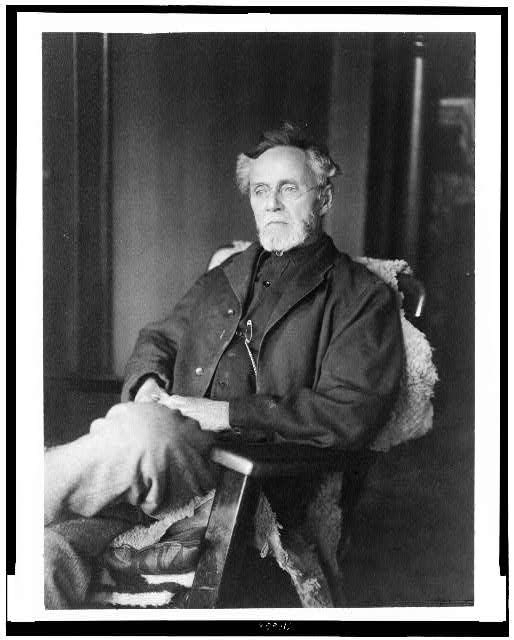
Andrew Taylor Still founded osteopathy in the United States in 1874.
It is based on the idea that the body’s structure and function influence each other.
The assessment considers the area of discomfort, movement, daily habits, and how the rest of the body relates to it.
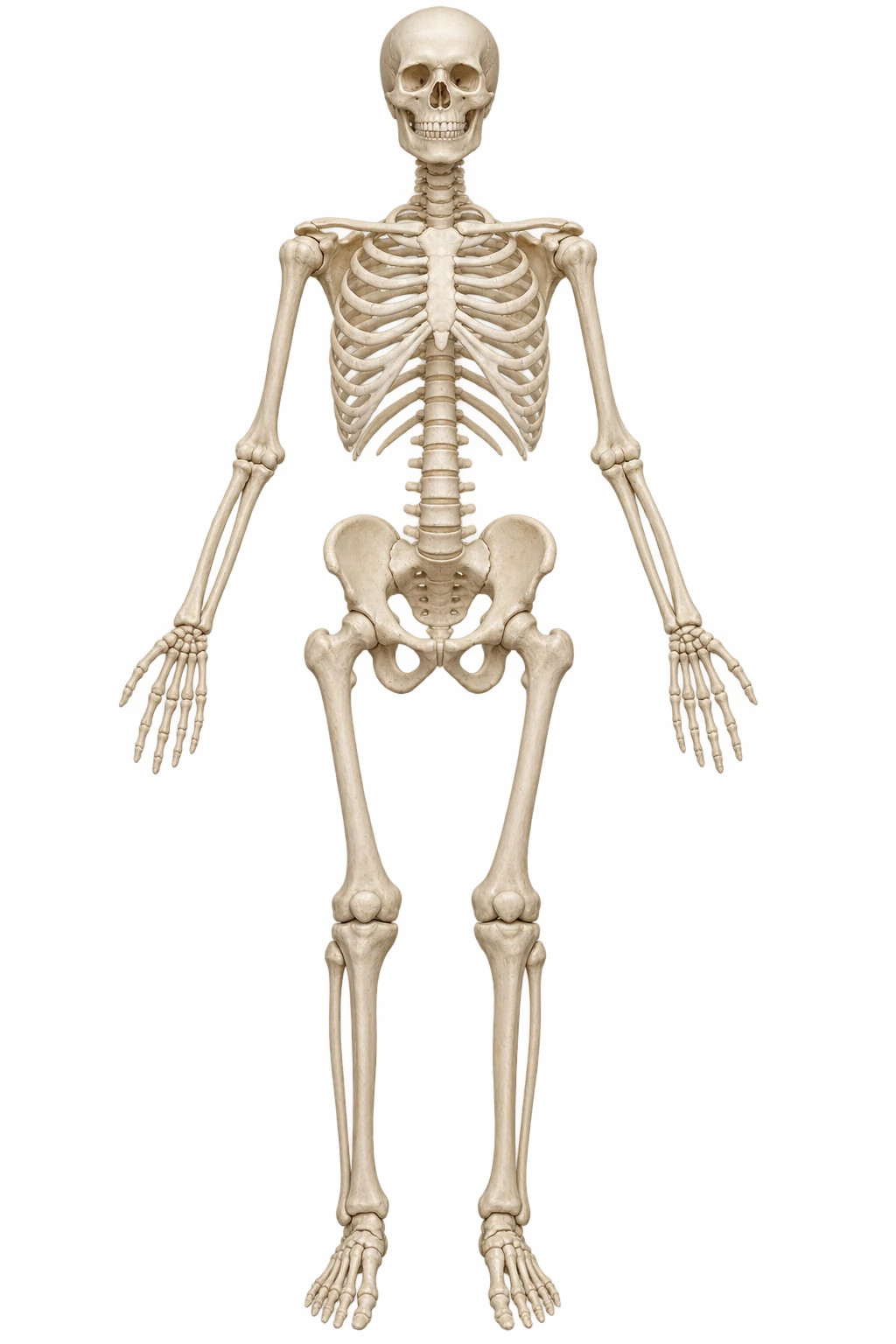
The structure and function of bones, muscles, and joints are considered together.
The ability of the body to regulate itself and maintain health helps guide this approach to care.
03Craniosacral Rhythm
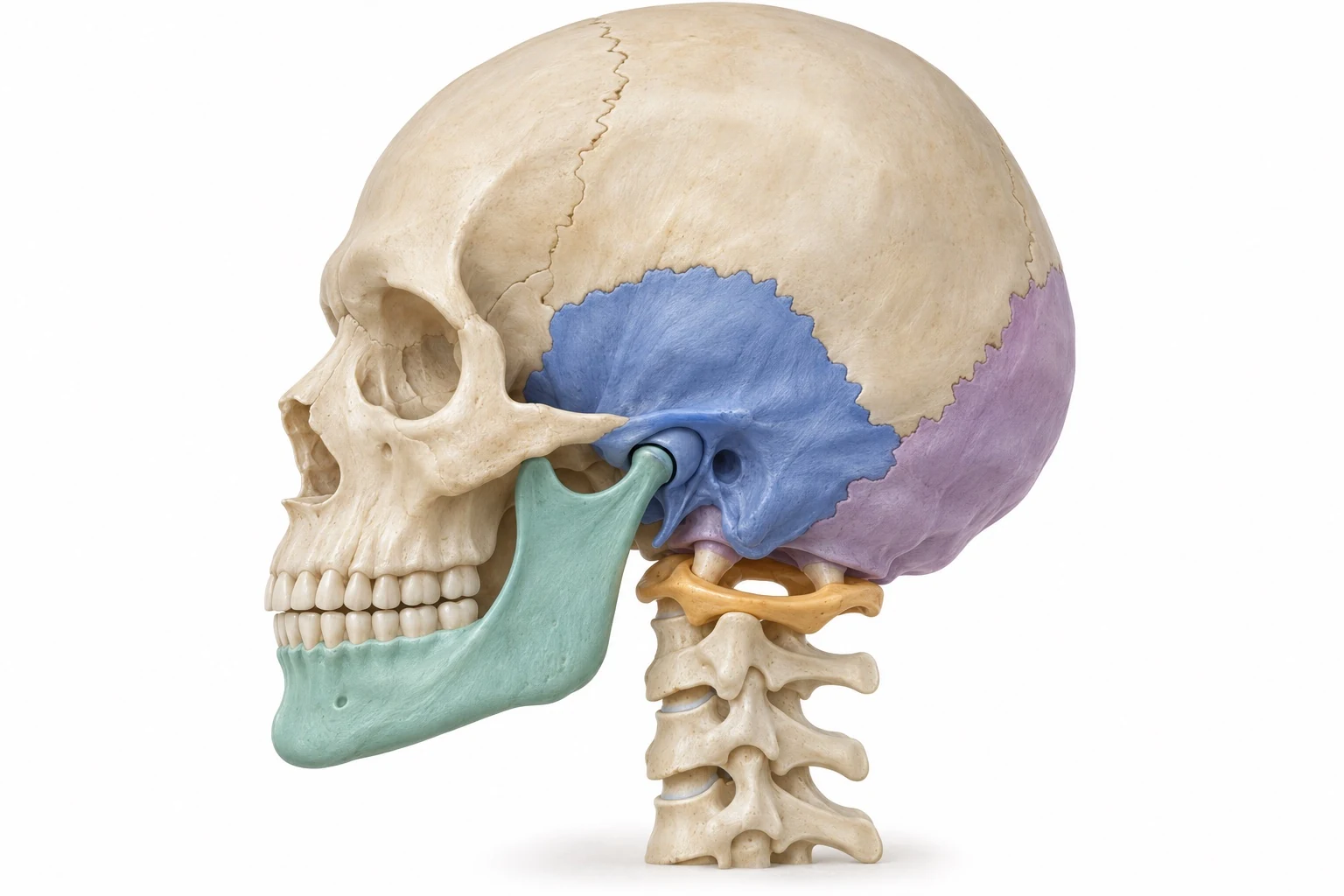
The skull consists of 22 bones. Eight enclose the brain and 14 form the face. The skull base includes the sphenoid in the center, the temporal bones on either side, and the occipital bone at the back.
The lower jaw forms a joint with the temporal bone on each side. Cranial osteopathy pays particular attention to subtle movement and balance among the bones of the skull.
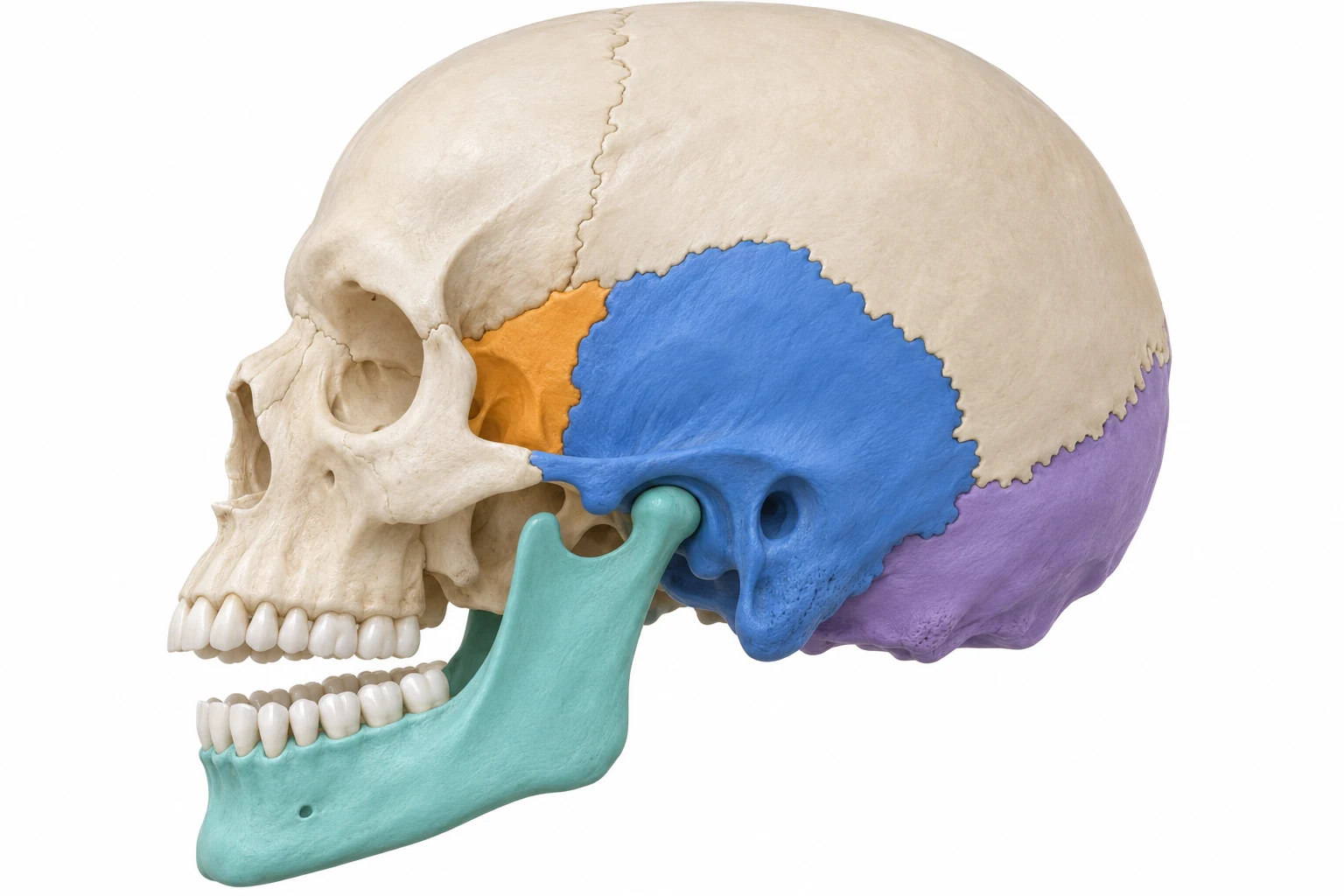
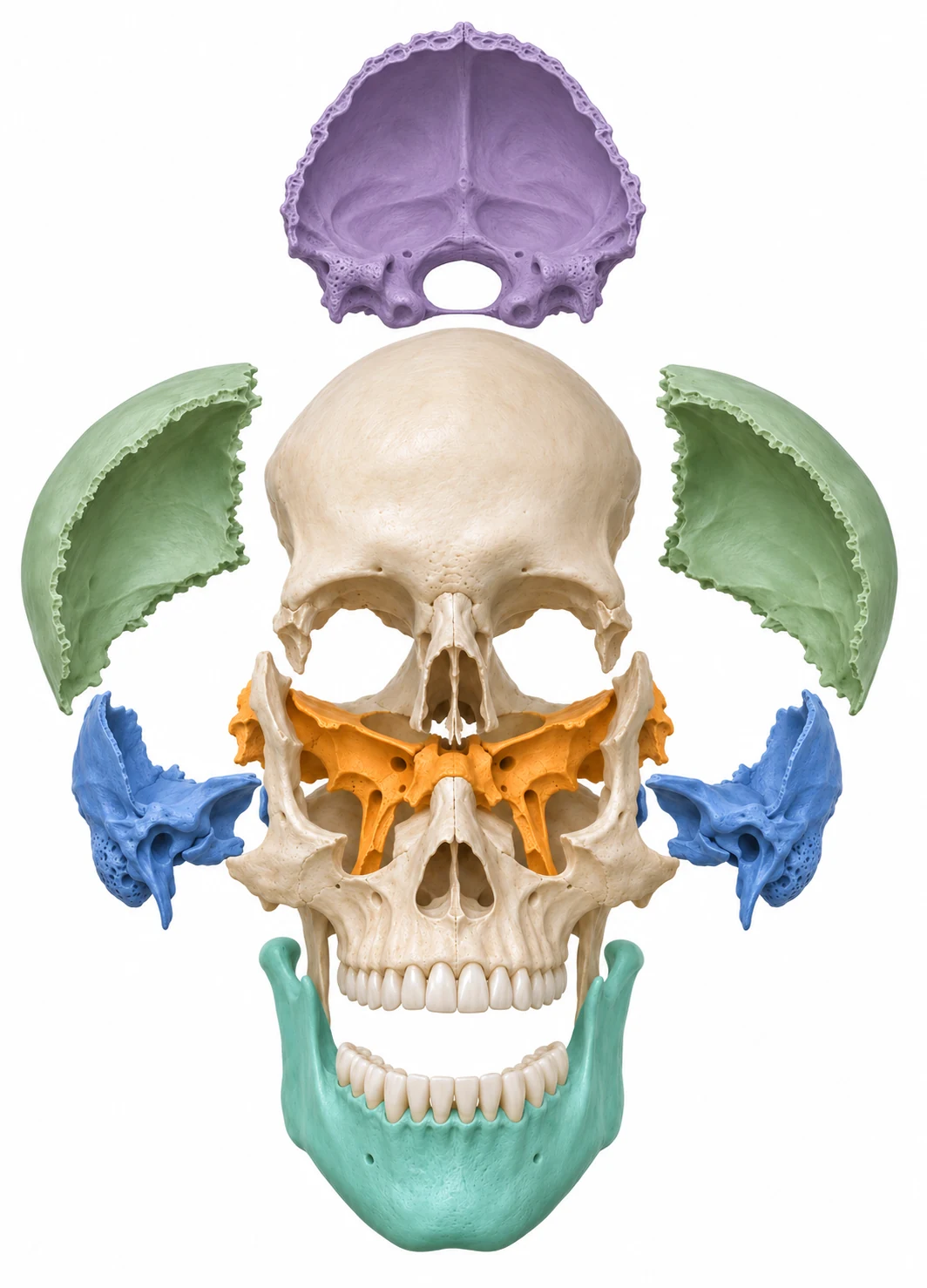
The craniosacral approach considers the skull, sacrum, and surrounding tissues together. Practitioners call the subtle rhythm they describe feeling with their hands the craniosacral rhythm.
In this model, the 22 interlocking bones of the skull are thought to expand and contract evenly when they fit together without asymmetry.
In this model, uneven alignment is described as producing movement that varies in direction and magnitude across the skull.
Why cranial osteopathy focuses on this rhythm
Cranial osteopathy interprets the rhythm as an expression of the body’s capacity to regain balance and recover.
Practitioners consider the skull and sacrum, the brain and spinal cord, their surrounding membranes, and cerebrospinal fluid as a functional whole. They look for a steady, unrestricted rhythm within that model.
04Our Dental Approach
A question inspired by osteopathy
“Could I find a lower jaw position where the rhythm feels more even?”
Dr. Lee observed the skull while making very small changes to the position of the lower jaw.
He noticed a position where the rhythm felt more even to him and came to use this observation as a guide in his assessments.
The MCB splint is used to maintain the position identified in this way.
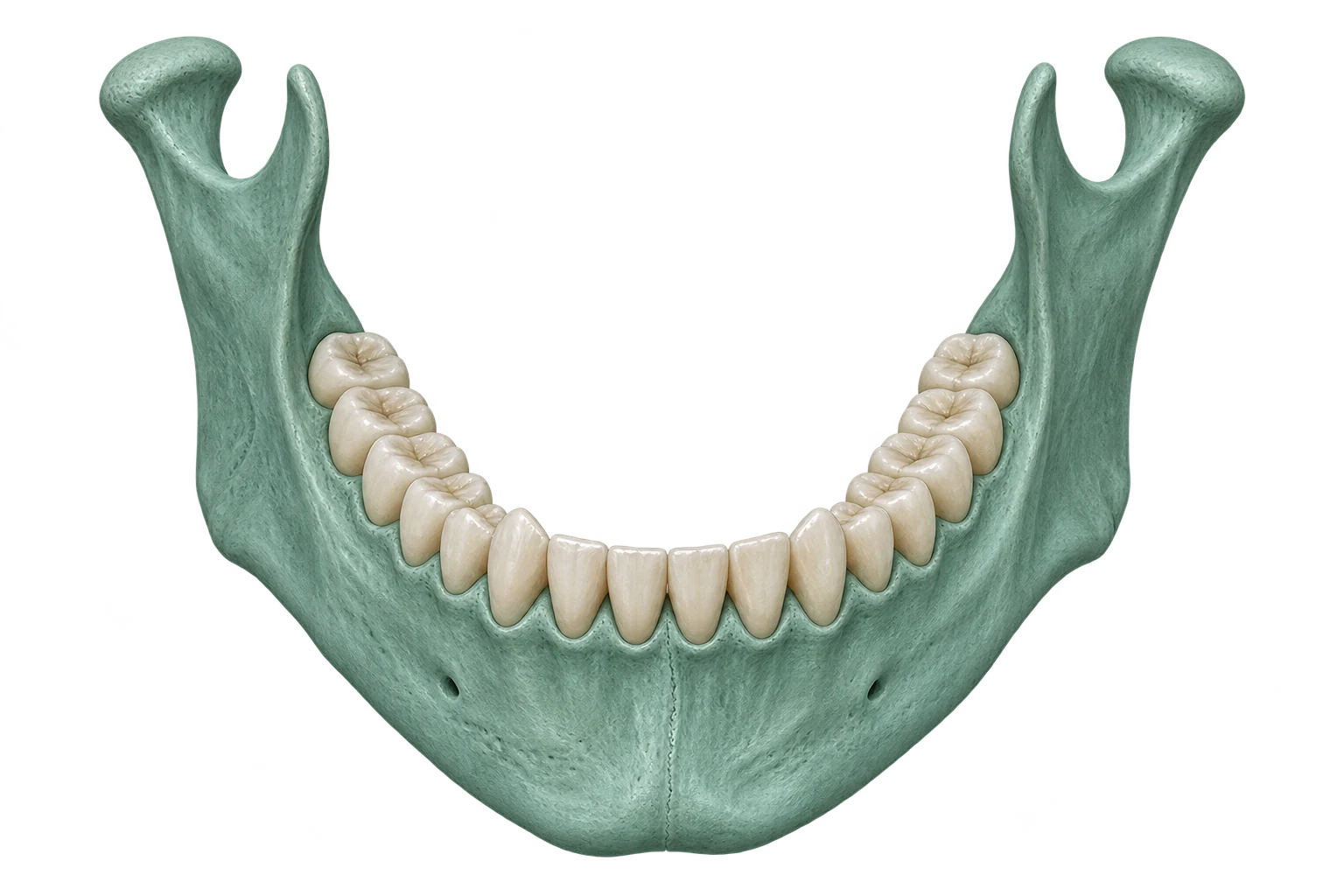
This illustration explains Dr. Lee’s assessment approach. The position and range of adjustment vary by patient.
05Osteopathy Around the World
From politics and culture to sports and the arts,
these stories show different connections to osteopathy.
These are accounts of medical careers, educational patronage, and personal choices. Celebrity use or endorsement does not establish the effectiveness of any technique.
Treatment Principles at a Glance